
How to Choose the Best Preschool in Navi Mumbai for Your Child
Home / School / How to Choose the Best Preschool in Navi Mumbai for Your Child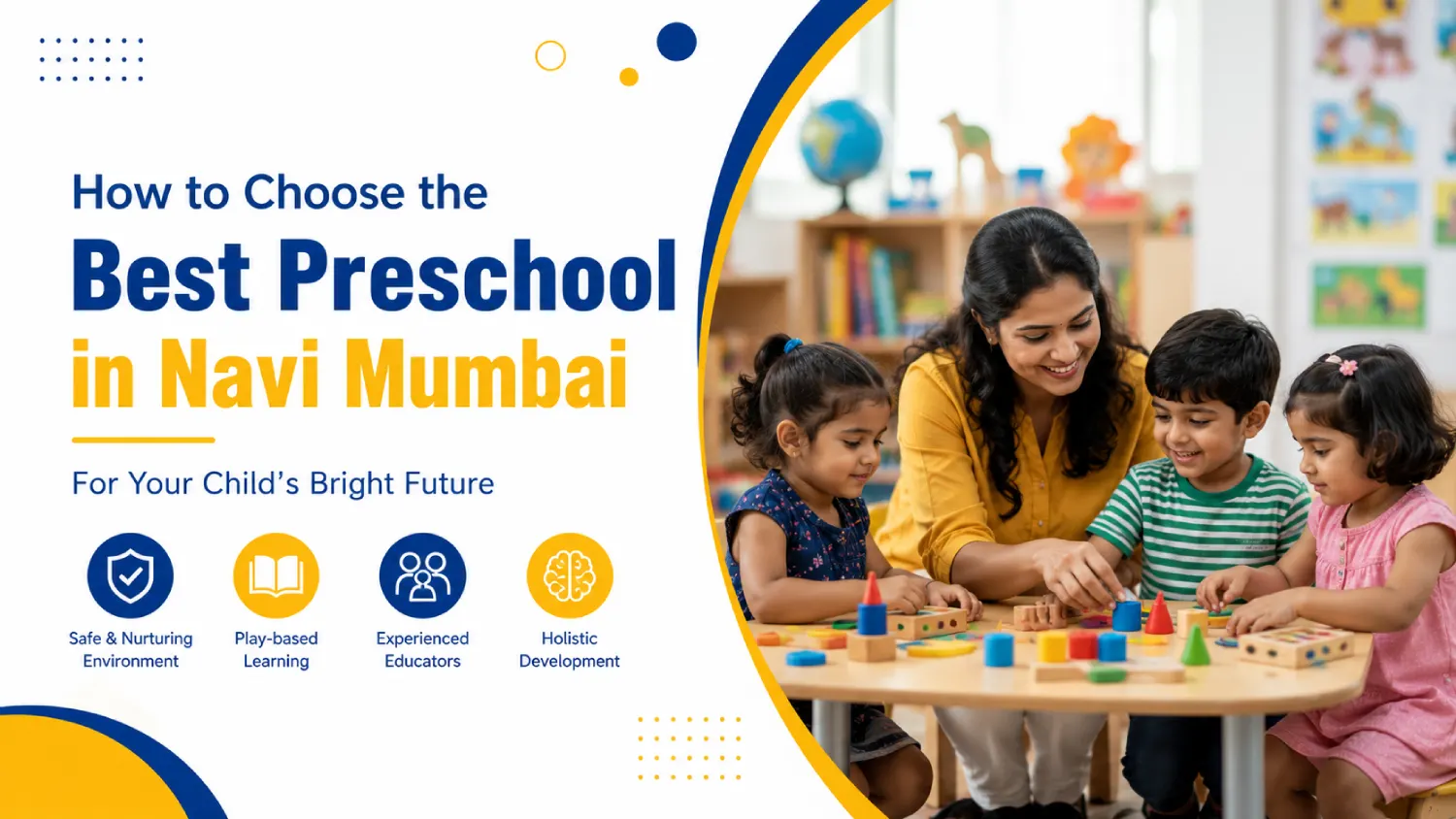
The first day a child walks into a preschool stays in a parent’s memory for years. Those tiny shoes, the new bag, the little wave at the gate. Behind that sweet moment sits a big question that keeps many Navi Mumbai parents awake at night. Which school is the right one? The early years move fast, and the place a child spends them in shapes how they speak, play, share and learn for a long time after.
So how does a parent pick well from so many options around Panvel, Kamothe and Kharghar? The short answer is this. The best preschool in Navi Mumbai is the one that keeps a child safe, has warm and trained teachers, follows a clear learning method that fits the child, and treats parents as partners. Everything else is detail. This guide walks through each of those points in simple steps, with the kind of questions a parent can actually ask on a school visit. By the end, the choice feels far less scary and a lot more sure.
What really happens inside a child’s brain in the early years?
The early years are the busiest time a human brain will ever have. In these years the brain builds the wiring for language, emotion, memory and problem solving. A good preschool fills the day with talking, songs, play and gentle challenges, which is the food a young brain needs. A weak one wastes this golden window.
In plain words, an early years setting is a place that cares for and teaches children from about age two up to the start of formal school. The point is not to push reading and writing too early. The point is to build curiosity, confidence and social skills first.
How does early schooling affect a child years later?
Children who attend a warm, well-run preschool tend to settle faster in primary school. They are used to sitting in a group, listening to a teacher, sharing toys and speaking up. Studies on early education link quality preschool with better language and social skills, and a smoother move into Class 1. The early start does not make a child a genius overnight. It builds a steady base that schoolwork can later stand on.
What should parents check before picking any preschool?
A pretty building and a shiny brochure are easy to fall for. The things that matter most are often the things that do not show up in photos. Here is what to check first.
Are the safety steps and building good enough?
Safety comes before everything. A parent should look for clean and child-sized toilets, soft play areas, covered staircases, and a building free from sharp edges and open wires. CCTV cameras, a fire safety plan, and a clear sign-in and pick-up system are all good signs. Ask who is allowed to collect the child and how the school checks that person at the gate.
Are the teachers qualified and the class size right?
The teacher makes or breaks a preschool. Look for staff who are trained in early childhood care, who speak gently, and who actually enjoy being around small children. The number of children per adult also matters a lot. A smaller group means each child gets noticed, helped and hugged when needed. As a rough guide, the younger the children, the fewer of them one adult should handle at a time.
What does the curriculum and assessment look like?
Ask how the school plans the week. A good early years programme mixes free play, story time, art, music, outdoor games and simple early maths and language. Ask how the school shares a child’s progress. The best ones use friendly updates, photos and short parent meetings, not stressful tests for tiny children.
Which curriculum approach suits a young child best?
Parents often hear words like Montessori or Play-Way and feel lost. None of these is magic. Each is a way of teaching, and the right one depends on the child. Below is a plain breakdown.
What is the Montessori approach?
Montessori is a method where children pick activities at their own pace using special hands-on materials. Teachers guide quietly instead of giving non-stop instructions. It suits children who like to focus and work on their own.
What is the Play-Way method?
The Play-Way method teaches through games, songs, stories and free play. Learning hides inside fun. It suits active, chatty toddlers who learn best while moving and playing with others.
What is Activity-Based Learning?
Activity-Based Learning teaches through doing. Children learn numbers by counting real objects and learn colours by painting. It suits children who understand ideas better with their hands than with a worksheet.
What are the warning signs of a weak preschool?
Some problems are easy to spot once a parent knows where to look. A few red flags should make any parent pause.
Why are crowded classrooms a problem?
A room packed with children and one tired adult is a worry. In a crowd, a shy child gets ignored and a restless child gets scolded. Neither gets real attention. If a room feels noisy, cramped and out of control during a visit, that is a clear sign to walk away.
Why does the staff’s training matter so much?
Untrained staff may mean well, but they often do not know how to handle a tantrum, a hurt child or a slow learner the right way. Ask about teacher training and how long the staff have stayed at the school. High staff turnover, where teachers keep leaving, often points to deeper trouble inside.
What should parents ask during a school visit?
A visit tells a parent far more than any website. Walk in, watch the children, and ask direct questions. Below are simple ones that reveal a lot.
Questions about the day-to-day routine
- What does a normal day look like from drop-off to pick-up?
- How much time is play and how much is sitting work?
- What happens at nap time and snack time?
- How does the school handle a child who is upset or new?
Questions about safety and care
- Is there CCTV, and can parents view it?
- Who is trained in basic first aid?
- What is the pick-up rule, and how are visitors checked?
- How does the school inform parents if a child falls ill?
What do the numbers say about the early years?
The case for a good early start is not just emotion. The figures below show why the first five years carry so much weight, and why a parent’s choice here is far from small.
| Fact About Early Childhood | What It Means for a Parent | Source |
|---|---|---|
| About 90% of a child’s brain growth is finished by age five | The preschool years are the best window for learning | First Things First |
| Over one million new brain connections form each second in early childhood | Rich daily talk and play build a strong base | Centre for Early Childhood, UK |
| By age three the brain has reached about 80% of its adult size | Real learning starts well before formal school | Lurie Children’s Hospital |
These figures explain a simple truth. The years a child spends in preschool are the years the brain is building fastest. The right place makes those years count.
What makes MNR Golden Kids stand out among preschools in Navi Mumbai?
For parents in Kamothe, Panvel and nearby areas, MNR Golden Kids is one name worth a close look when searching for the best preschool in Navi Mumbai. Running since 2013, it has spent over a decade caring for the youngest learners in the area. Here are the points that set it apart.
- A safe and watched campus. The school uses CCTV surveillance across its premises, so parents get peace of mind through the day.
- Trained and caring teachers. The staff focus on early childhood care and on building each child’s confidence, social skills and English communication.
- A holistic daily mix. The programme blends personality development, arts and crafts, story time and play, so children grow in head, hand and heart together.
- Small, friendly groups. With a limited class size, each child is seen and helped, not lost in a crowd.
- Easy transport. A school transport facility makes the daily journey safe and simple for working parents.
- A wider MNR family. MNR Golden Kids is part of the MNR group, which runs early years centres across Hyderabad, Mumbai and Dubai, so its methods are tested across many cities.
In short, the school covers the points that matter most to parents. Safety, warm teachers, a balanced day and clear care.
How do the main preschool choices compare?
To make the choice clearer, here is a quick look at how the three popular learning styles compare. The best fit depends on the child, not on the fancy name.
|
A good preschool often blends a little of each, so a parent should ask which mix the school follows and why.
How can parents make the final choice with confidence?
Choosing a preschool comes down to a few honest checks. Visit the school. Watch how the teachers speak to the children. Look at safety, class size and the daily routine. Ask the questions in this guide and trust what is seen, not just what is said. A parent knows their own child best, so the right school is the one where that child looks happy, safe and keen to come back.
For families in and around Kamothe and Panvel, the best preschool in Navi Mumbai is the place that ticks these boxes and feels right on the day of the visit. MNR Golden Kids is one such option that brings together safety, trained teachers and a warm, play-rich start. Book a visit, walk through the classrooms, and let the child’s smile help make the final call.
Follow MNR Golden Kids on Instagram.
Frequently Asked Questions
Most preschools in Navi Mumbai take children from about two years of age into playgroup, with nursery and kindergarten classes following each year. Around age two to three is a common and comfortable start.
Most preschools run from Monday to Friday or Monday to Saturday, for a few hours each morning. Short and regular days suit small children better than long ones, so attending on the school's set days is enough for a steady routine.
A playgroup is the very first stage, for the youngest children, and focuses on play, settling in and basic social skills. A nursery class comes next and slowly adds early letters, numbers and group activities, while still keeping play at the centre.
Neither is simply better. Montessori suits children who like to focus and work on their own with hands-on materials. A regular play-based preschool suits active, social toddlers. The best choice is the one that matches the child's nature and the parent's comfort.
Watch for the simple signs. A happy child talks about school, names friends and teachers, eats and sleeps well, and is keen to go back. New songs, words and small acts of sharing at home are all good proof that the preschool is doing its job.
Related Blogs
How The Top Nursery School In Kukatpally Teaches Problem-Solving Skills to The Children!
Early childhood education has begun to receive serious attention across India. Recent early learning studies…
Why Play-Based Learning Is More Powerful Than Worksheets
There is something quietly powerful about watching a four-year-old play with blocks and build a…
How to Identify Your Child’s Natural Learning Strength
Some children speak loudly about who they are. Others whisper it. And if we are…
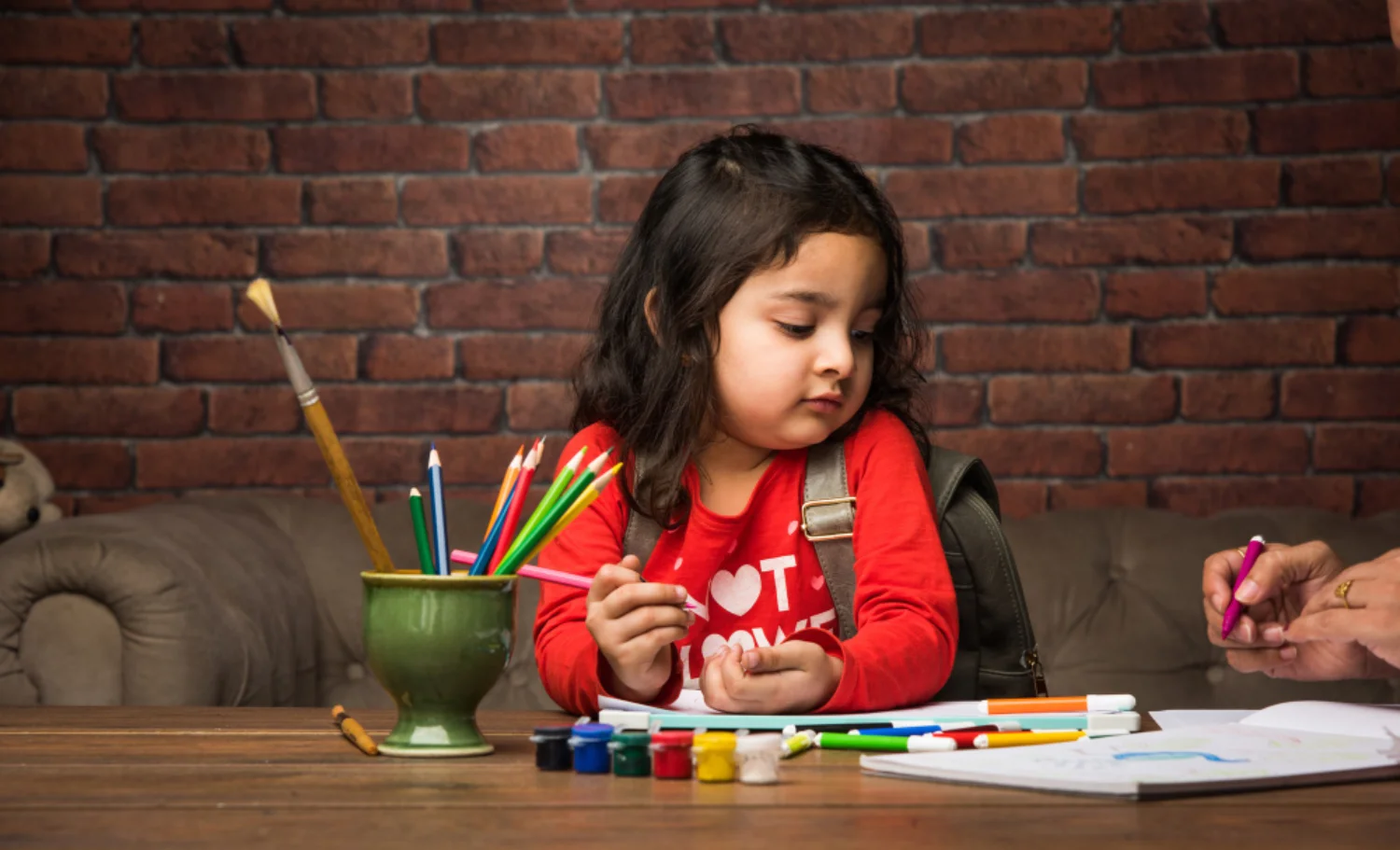
Deep-Rooted Issues of Pre-Primary Education in India: How the Top Preschool in Sangareddy Makes a Healthy Pre-Primary Learning Environment!
Across India, early childhood education is slowly receiving the attention it deserves. According to national…

10 Important Hygiene Tips That You Can Teach Your Kids
Small habits shape strong foundations. A child who learns to care for personal hygiene carries…
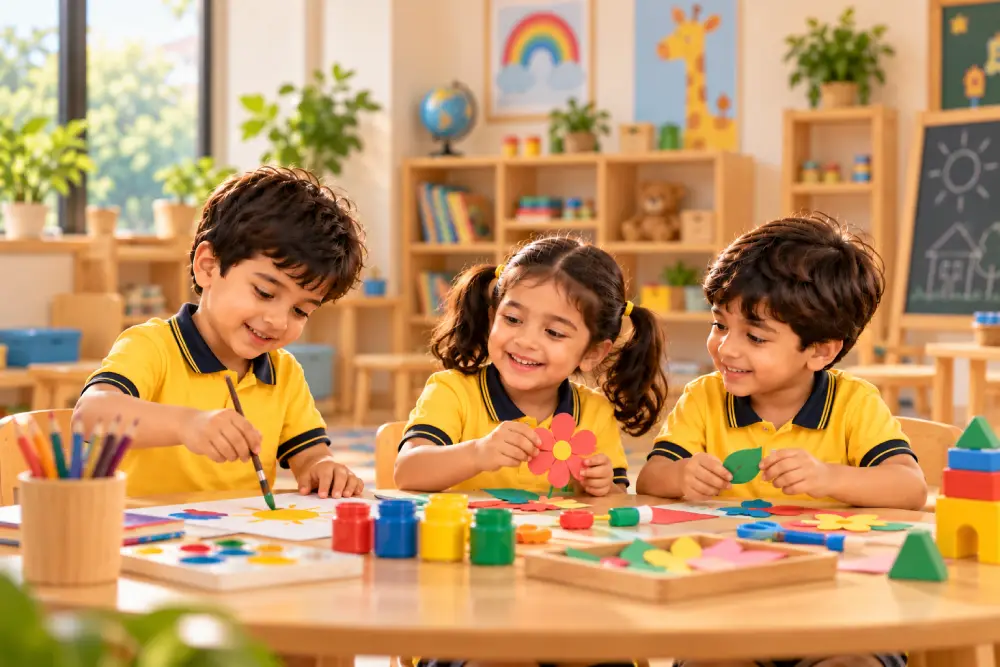
Preschool in Navi Mumbai (2027-28): How to Find the Best One, Node by Node
Start with preschools and play schools in your own node. Then pick the ones that…