
Is Your Child Ready for Preschool? A Guide for Parents in Kalamboli and Roadpali
Home / School / Is Your Child Ready for Preschool? A Guide for Parents in Kalamboli and Roadpali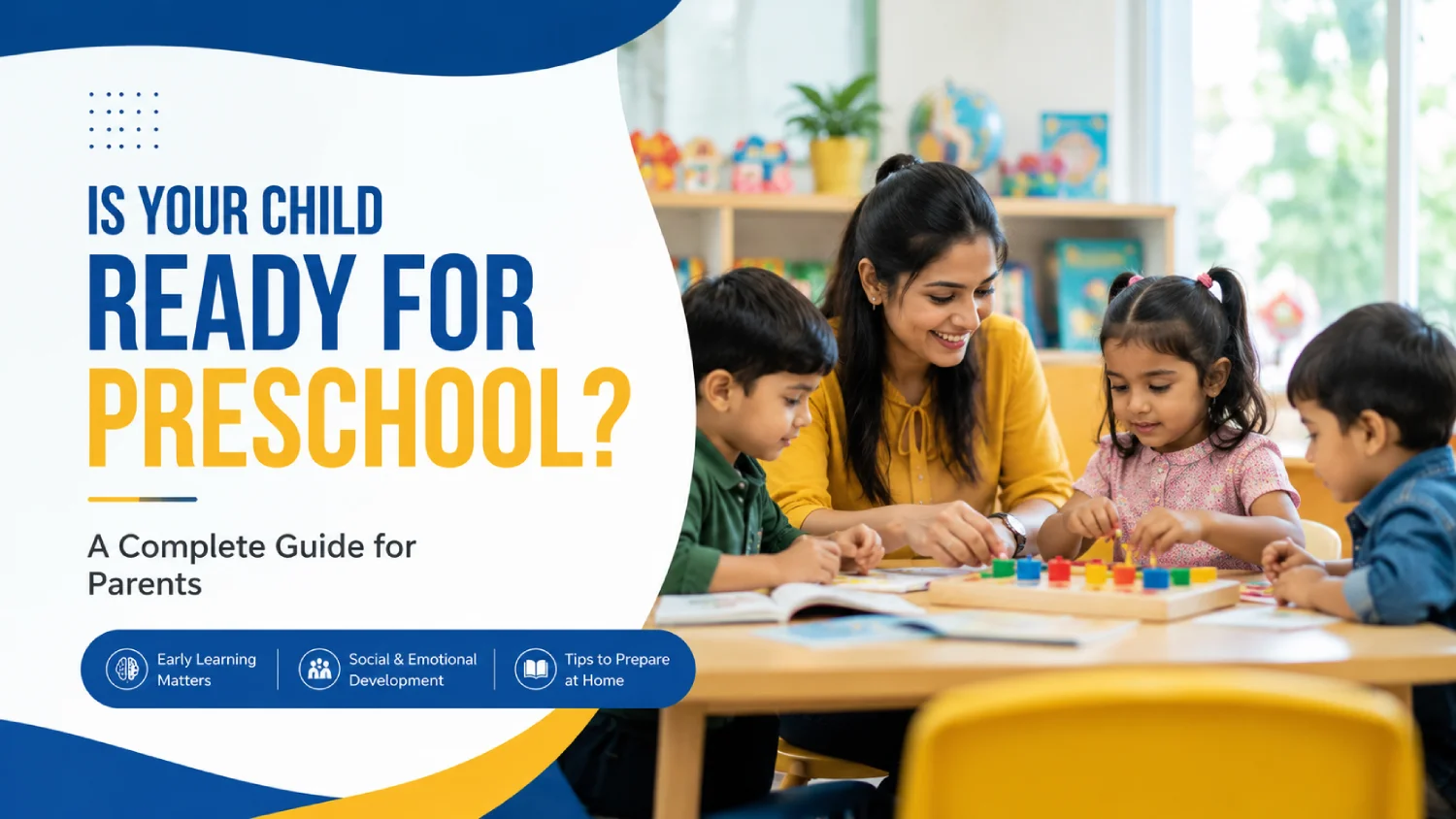
Many parents in Kalamboli and Roadpali ask the same question as their little one turns three. Is my child ready for preschool? The honest answer is that readiness is not only about a birthday. A child is usually ready when he or she can stay away from a parent for a short while, show interest in other children, and follow simple instructions. Age matters too, but it works alongside these everyday signs.
The early years shape how a child speaks, plays, and feels about learning. So the choice of the first school carries real weight for a young family. This guide walks parents through the signs of readiness, what a good programme looks like, and how to settle a child into a new routine. It also explains how to pick the best pre-primary school in Kalamboli without second-guessing every step. By the end, parents in Sector 16 and nearby areas will feel surer about the road ahead.
What is the difference between developmental readiness and age readiness?
Age readiness is simple. It is the number of years a child has completed by a set cut-off date. Developmental readiness is about skills and behaviour. It looks at how a child speaks, moves, plays, and copes when a parent is not around.
Both points matter. A child may be the right age yet still need a few months to feel ready. Another child may seem forward in speech but cry at every goodbye. Parents who watch both age and behaviour make a calmer, more informed choice.
What are the age eligibility guidelines for preschool in Maharashtra?
Maharashtra has aligned its school entry rules with the National Education Policy (NEP) 2020. Under these rules, a child must be at least three years old to join nursery, and six years old to start Class 1. The state education department uses set date-of-birth windows for each level, and these windows shift every academic year.
The exact cut-off can differ a little by board and by school. So parents in Kalamboli should always confirm the current date-of-birth range with the school office before applying.
The table below sets out the key facts at a glance.
| Data point | Detail | Source |
|---|---|---|
| Minimum age for nursery | 3 years completed | NEP 2020 and Maharashtra Directorate of Education |
| Minimum age for Class 1 | 6 years completed | NEP 2020 and Maharashtra Government Resolution |
| Foundational Stage age band | 3 to 8 years | NEP 2020 |
| Brain growth before age 5 | About 90 percent | Harvard University, Center on the Developing Child (widely cited) |
| Regulation of private preschools | Draft Maharashtra ECCE Act, 2025 | Government of Maharashtra (draft stage, 2025) |
These figures are indicative and meant for guidance. Cut-off dates are revised each year, so the school is the best source for current numbers.
Which milestones do most children reach by age three?
By the age of three, most children show a clear set of skills. These milestones help a parent judge readiness alongside the official age rule. The table below lists the common signs, grouped by area of growth.
| Area of growth | What most three-year-olds can do |
|---|---|
| Movement | Walks and runs well, climbs stairs with little help, kicks a ball |
| Language | Speaks in two to three word sentences, knows many everyday words, follows two-step instructions |
| Social play | Plays near other children, copies adults, shows affection to family |
| Self-help | Eats with a spoon, drinks from a cup, shows early toilet readiness |
| Emotional | Stays with a familiar adult for short periods without too much worry |
These milestones are based on common child-development guidance and the NEP 2020 Foundational Stage approach. Every child grows at his or her own pace, so small gaps are normal and not a cause for worry.
Which social and emotional signs should parents look for?
Skills on paper are only part of the picture. The way a child handles feelings tells parents a great deal. A child who can wait for a short turn, share a toy now and then, and recover quickly after a small upset is showing strong signs of readiness.
Watch how the child reacts to new faces and new places. A child who warms up to a new setting within a few visits will likely settle well at preschool.
Is separation anxiety normal or a concern?
Separation anxiety is very normal for young children. Most little ones feel uneasy when a parent leaves, and a few tears at drop-off are common. This usually fades within the first few weeks as the child learns that the parent always comes back.
It becomes a concern only when the worry stays very strong for many weeks and stops the child from joining any activity. In that case, parents can speak with the class teacher and plan shorter days at first.
How do group play and sharing skills show readiness?
Group play is a clear window into readiness. A child who watches other children, joins a game, and takes turns is ready for a classroom. Sharing is harder at this age, and that is fine. The goal is not perfect sharing but a willingness to try.
Preschool then builds on this start. Daily group time, songs, and small projects help children learn to wait, listen, and work side by side.
What does a good preschool curriculum look like?
A good early years programme keeps learning playful and hands-on. It mixes free play with light structure, so children build skills without losing the joy of being young. Reading readiness, early numbers, motor skills, and good habits all grow through play, not through long worksheets.
A strong curriculum is the mark of the best pre-primary school in Kalamboli. Parents should ask how each day is planned and how teachers track each child’s progress.
Structured play or unstructured play, which matters more?
Both types of play matter, and the best programmes balance them. Structured play has a clear goal, such as sorting shapes or a guided craft. It builds focus and follows a teacher’s plan. Unstructured play is free and child-led, such as building with blocks or pretend cooking. It builds creativity and problem solving.
A good preschool moves between the two through the day. This keeps children engaged and lets them learn in the way that suits them best.
How do creative arts and music help a child learn?
Art, craft, music, and dance are not extras. They are powerful tools for learning. Drawing and craft build small hand muscles that a child later uses for writing. Music and rhythm support memory, language, and listening.
These activities also build confidence. A child who sings in a group or shows a drawing to friends learns to express ideas in front of others. That skill helps in every later stage of school.
What should parents expect during the settling-in period?
The settling-in period is the first stretch of weeks when a child gets used to a new place, new faces, and a new routine. Most children take two to six weeks to feel at home. Some settle in days, while others need longer, and both are perfectly normal.
Parents can help by keeping goodbyes short and warm, sticking to a steady routine, and speaking about school in a happy way at home.
What happens in the first week at preschool?
The first week is mostly about comfort, not lessons. Teachers focus on helping each child feel safe and welcome. Days are often short, with plenty of free play, songs, and gentle routines.
Some tears and a few clingy mornings are common in this week. Most children begin to relax once they spot a friendly teacher and a fun corner to explore.
How do teachers help children adjust?
Trained teachers use simple, caring methods to ease the move. They greet each child by name, set up a fixed daily flow, and use songs to mark each part of the day. A steady routine helps a child know what comes next, which lowers worry.
Teachers also share regular updates with parents. This two-way contact builds trust and helps the family support the child at home.
How can parents shortlist the best pre-primary school in Kalamboli?
A short, clear checklist makes the search far easier. Parents should look at safety, teacher quality, the daily programme, hygiene, and how close the school is to home. Distance matters a lot for young children, since a short trip means less tiredness and an easier morning.
To find the best pre-primary school in Kalamboli, parents should visit in person, ask plenty of questions, and watch how staff speak with the children. A warm, well-run classroom is easy to spot once you are inside it.
What to look for when visiting campuses?
A campus visit tells a parent more than any brochure. While visiting schools near Sector 16, parents should check a few key things:
- Clean, bright, and safe classrooms with child-friendly furniture.
- Clear safety steps such as CCTV cover and a secure entry gate.
- A simple, play-based daily plan rather than heavy bookwork.
- Friendly, patient teachers who speak gently with children.
- A safe play area for running, slides, and outdoor fun.
It also helps to ask how many children share one teacher. A smaller group means each child gets more care and attention.
Should parents ask for a trial day?
Yes, a trial day is one of the best ways to judge a school. It lets a parent see the real classroom in action and lets the child test the setting. Many preschools in Kalamboli are happy to arrange a short visit or a trial session on request.
During the trial, watch how the child responds. A child who relaxes and starts to play within an hour is giving a strong, hopeful sign.
Why do parents in Kalamboli and Roadpali choose MNR Golden Kids?
For families in Sector 16 and nearby areas, MNR Golden Kids is a well-placed option to consider as the best pre-primary school in Kalamboli. The campus sits at Neelkanth Heights, Sector 16, Kalamboli, Roadpali, close to local landmarks, which keeps the daily trip short for neighbourhood families.
Key strengths that parents often value here include:
- A play-based curriculum that builds creativity and social skills.
- Air-conditioned classrooms for a comfortable learning space through the year.
- CCTV cover on the premises for added safety and peace of mind.
- Qualified and caring teaching staff focused on early years.
- Co-curricular activities such as art, craft, music, and dance.
- An easy location for families in Sector 16, Sector 17, and Roadpali.
Final Thoughts:
Readiness for preschool is a mix of age, skills, and feelings. A child who is around three, shows everyday milestones, and can manage short goodbyes is usually ready to begin. The right first school then turns that readiness into a happy start.
Parents in Sector 16 and Roadpali should visit a few campuses, ask honest questions, and request a trial day. With a clear checklist and a short, easy trip from home, finding the best pre-primary school in Kalamboli becomes a calm and joyful task rather than a worry. For local families, MNR Golden Kids is a sensible name to add to that shortlist.
Frequently Asked Questions
A child should have completed three years of age to join nursery, in line with NEP 2020 and Maharashtra rules. The exact date-of-birth cut-off changes each academic year, so parents should confirm the current window with the school office before applying.
Keep goodbyes short, warm, and confident, and never slip away without telling the child. Build a small drop-off routine, such as a quick hug and a wave at the gate. Most children settle within a few weeks once they trust that the parent always returns.
Choose the option that keeps the daily trip short and easy, since young children tire quickly. A nearby campus, such as the best pre primary school in Kalamboli for your family, makes mornings smoother and pick-ups simpler. Both Sector 16 and Roadpali have good choices, so let location, safety, and the daily programme guide the decision.
Most children settle within two to six weeks. Some feel at home within a few days, while others need a little longer, and both are normal. A steady home routine and a caring teacher speed up the process.
Yes, many preschools in Kalamboli offer a trial visit or a short trial session. It is a smart step, as it lets you see the classroom and lets your child test the setting before you decide.
Related Blogs
How to Improve Speaking Skills in Preschool Children Through Everyday Conversations
Parents can improve speaking skills in preschool children by having short, back-and-forth chats every day….
10 Fun Games That Help Children Learn and Grow Every Day
A child does not always learn by sitting with books. Learning often begins in the…
Working Parents in Hyderabad: How to Choose the Right Play School
Morning hours in Hyderabad move quickly. Office calls begin early, traffic builds up, and between…
The Quiet Power of Routine: How Simple Daily Rhythms Shape Your Child’s Growing Brain
There is something deeply reassuring about watching a child know what comes next. The small…
Best Preschools in Panvel (2027-28): An Area Guide for New Panvel, Old Panvel, Karanjade and Kon
The best preschool for your child is in your own area. It is play-based and…
How to Choose the Best Primary School – Preschool in Panvel Navi Mumbai – MNR Golden Kids
AI Overview To choose the best primary school, parents should check the teachers, safety, learning…
Leave a comment